Art
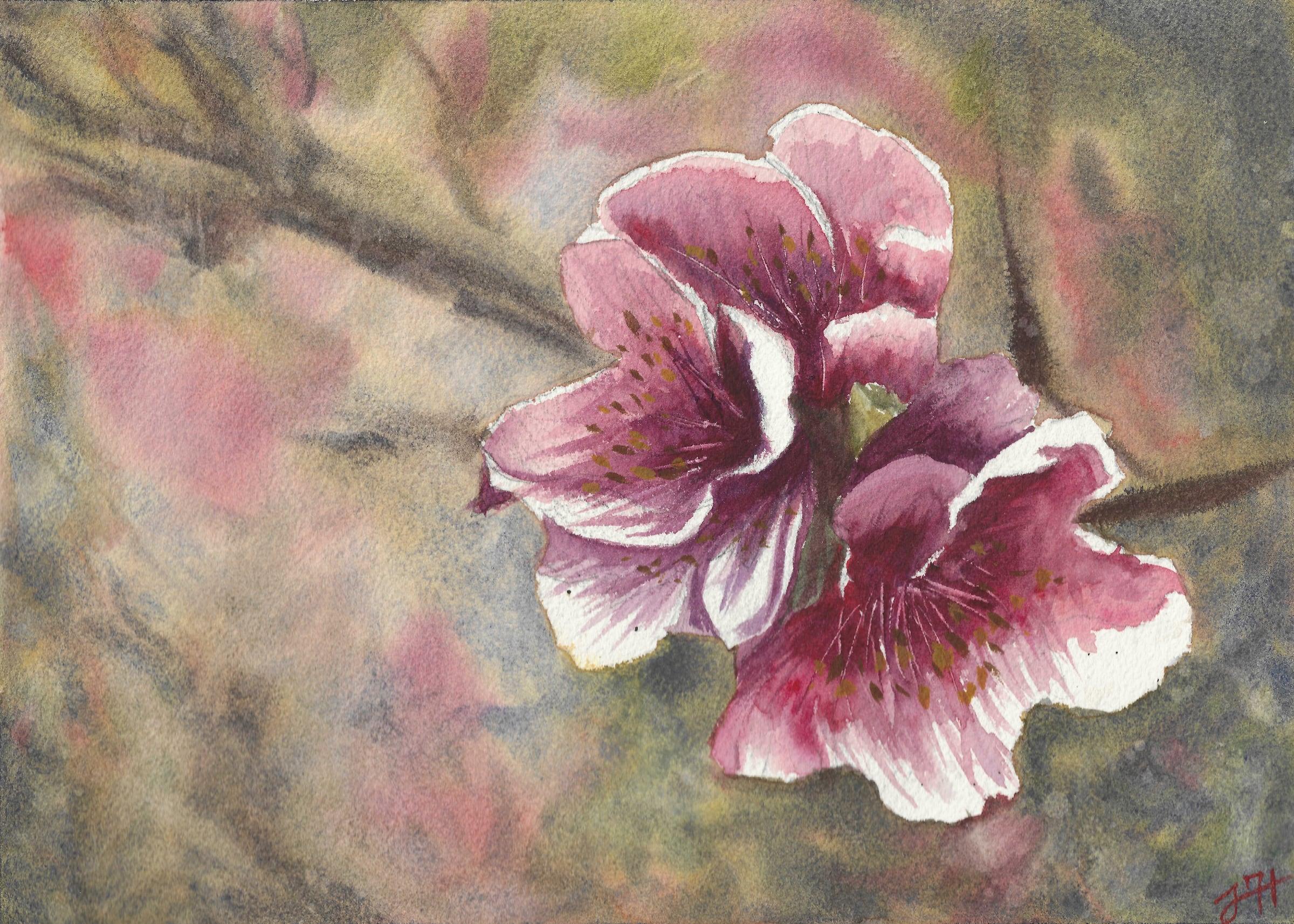
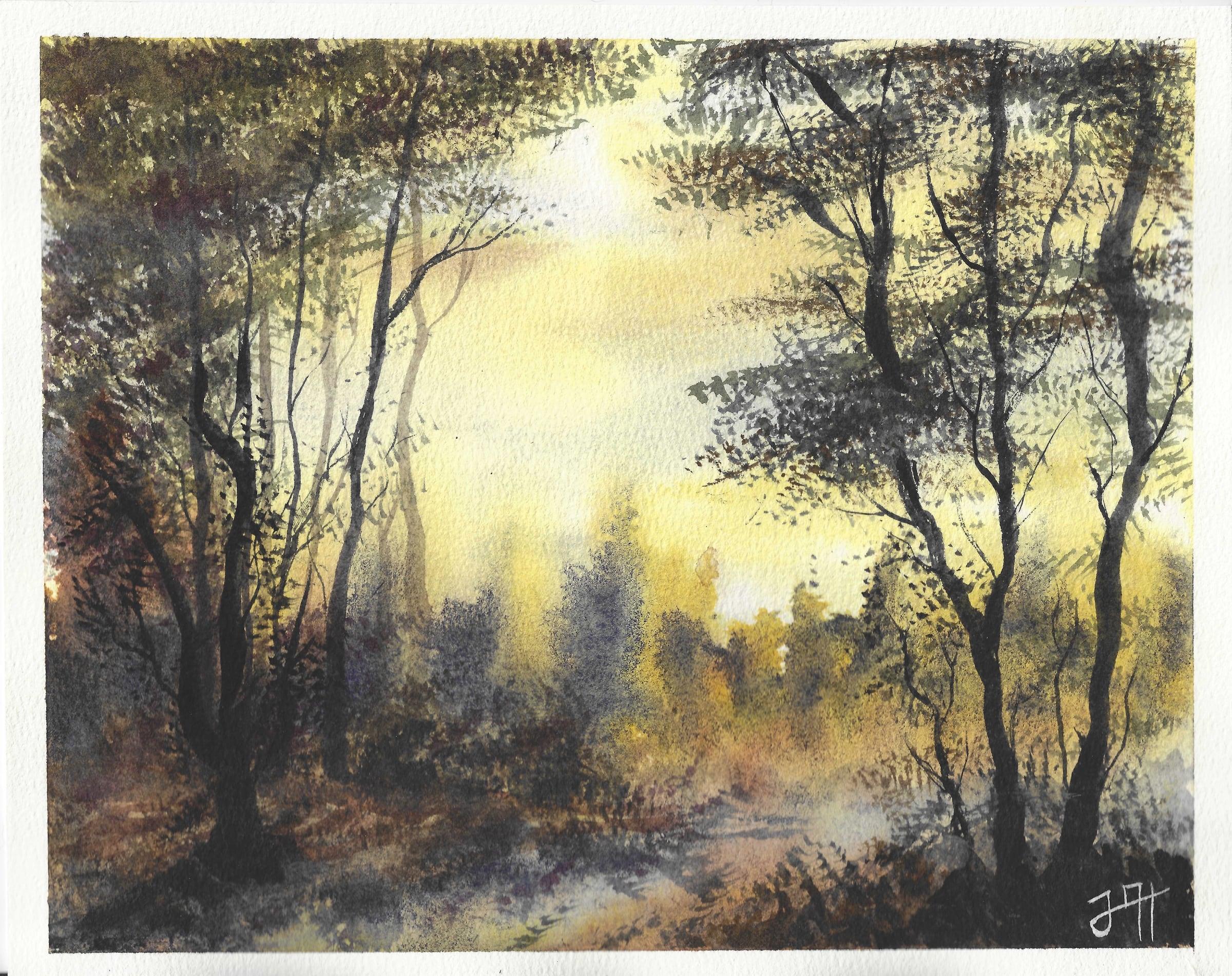
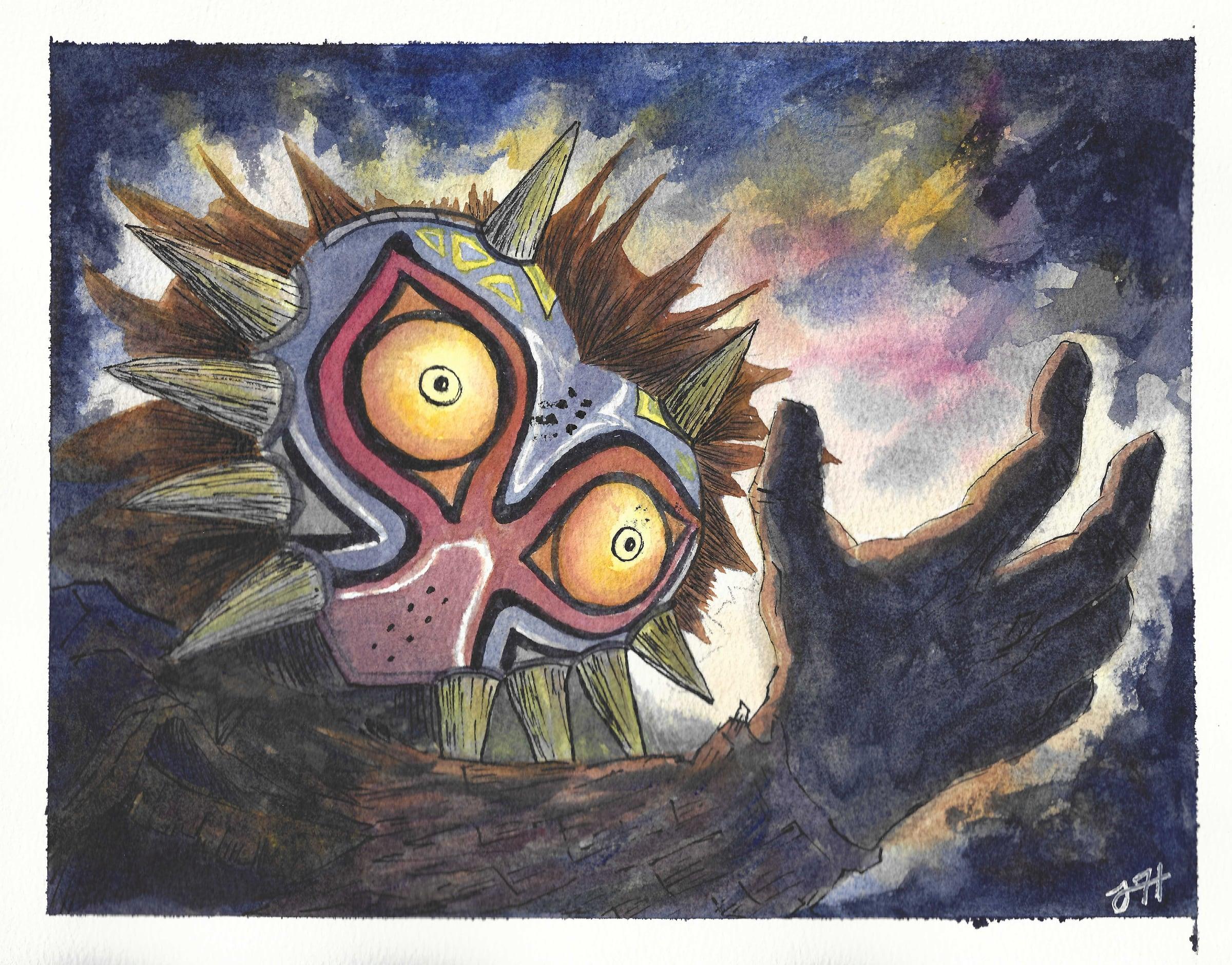
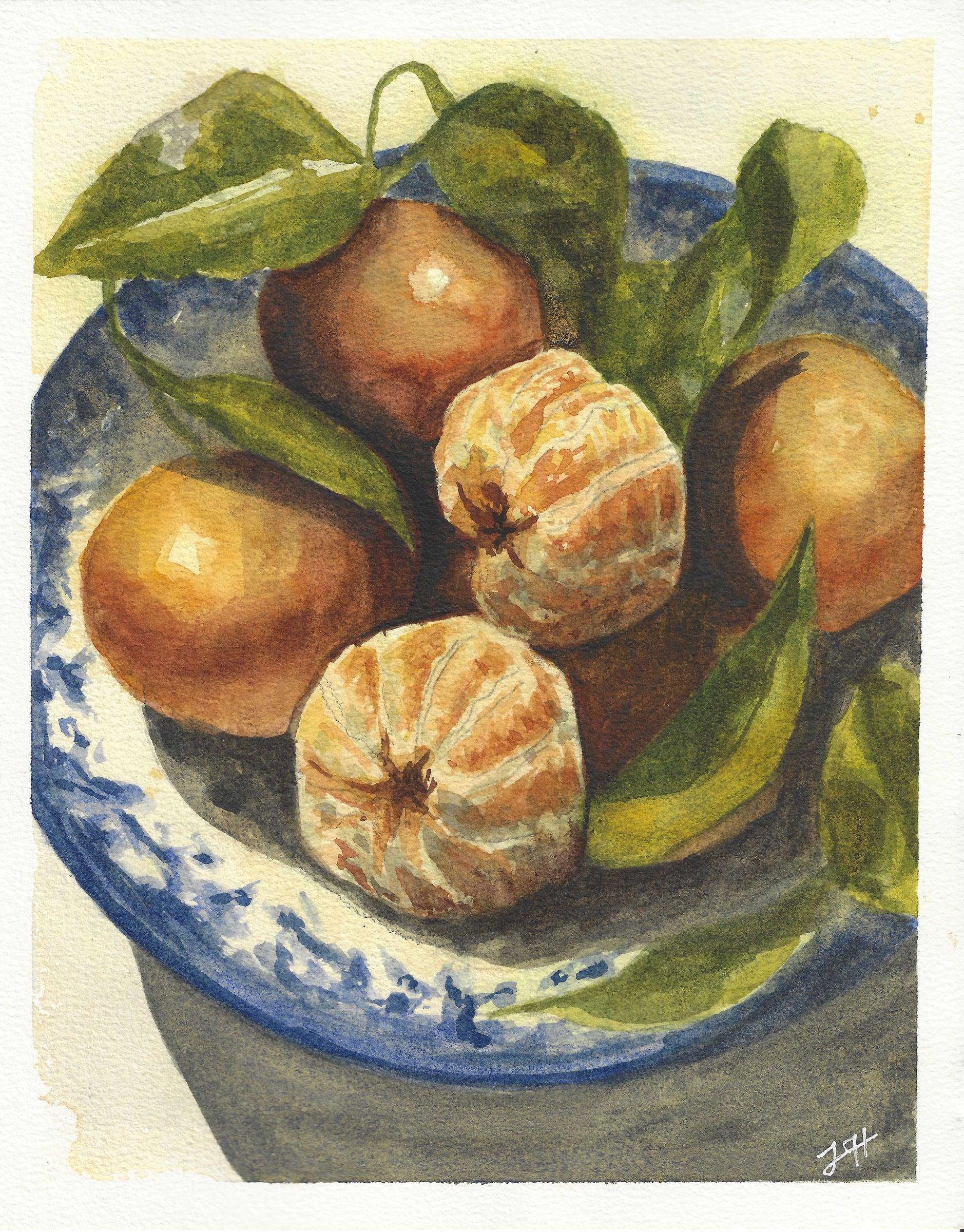
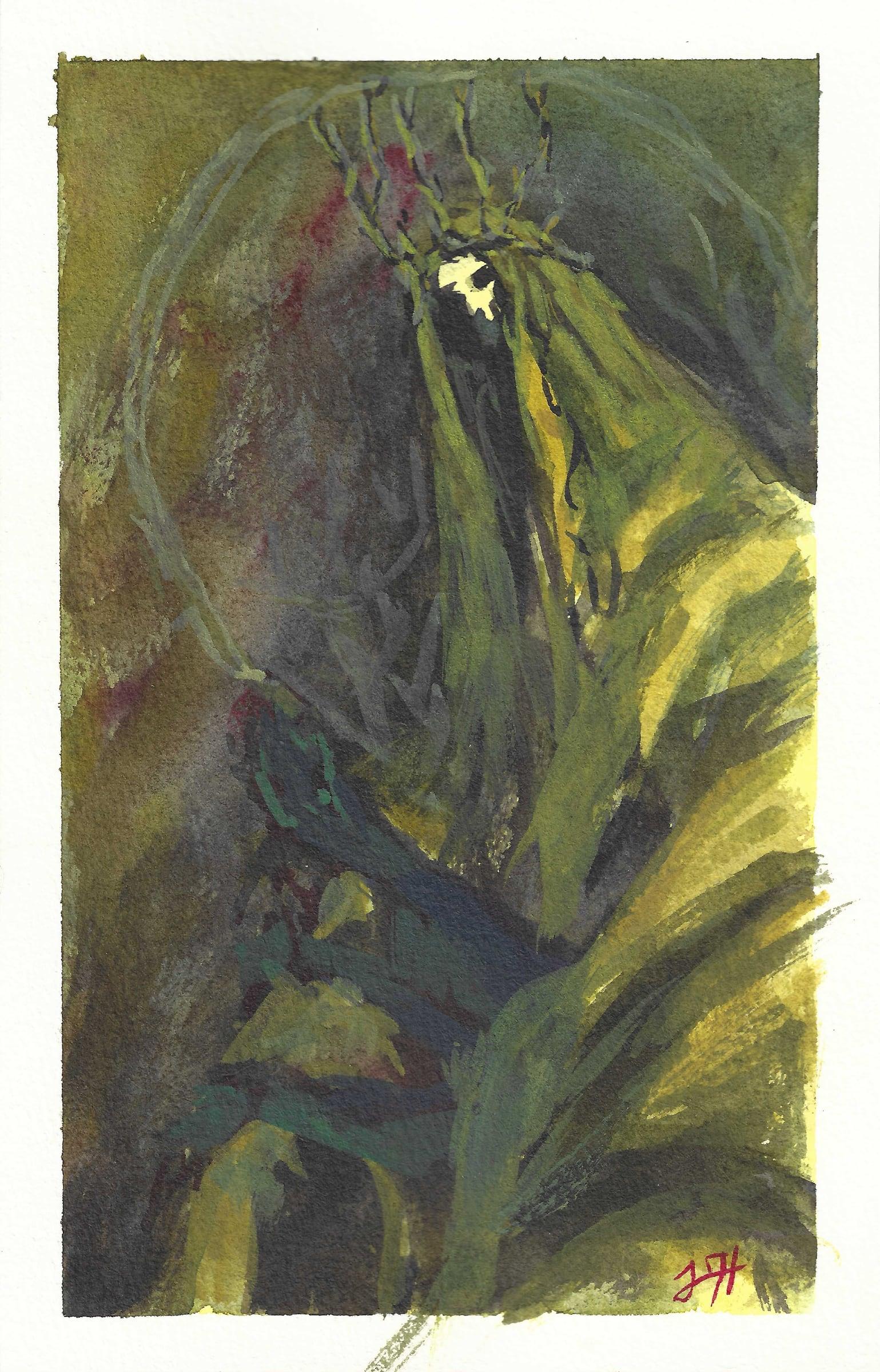
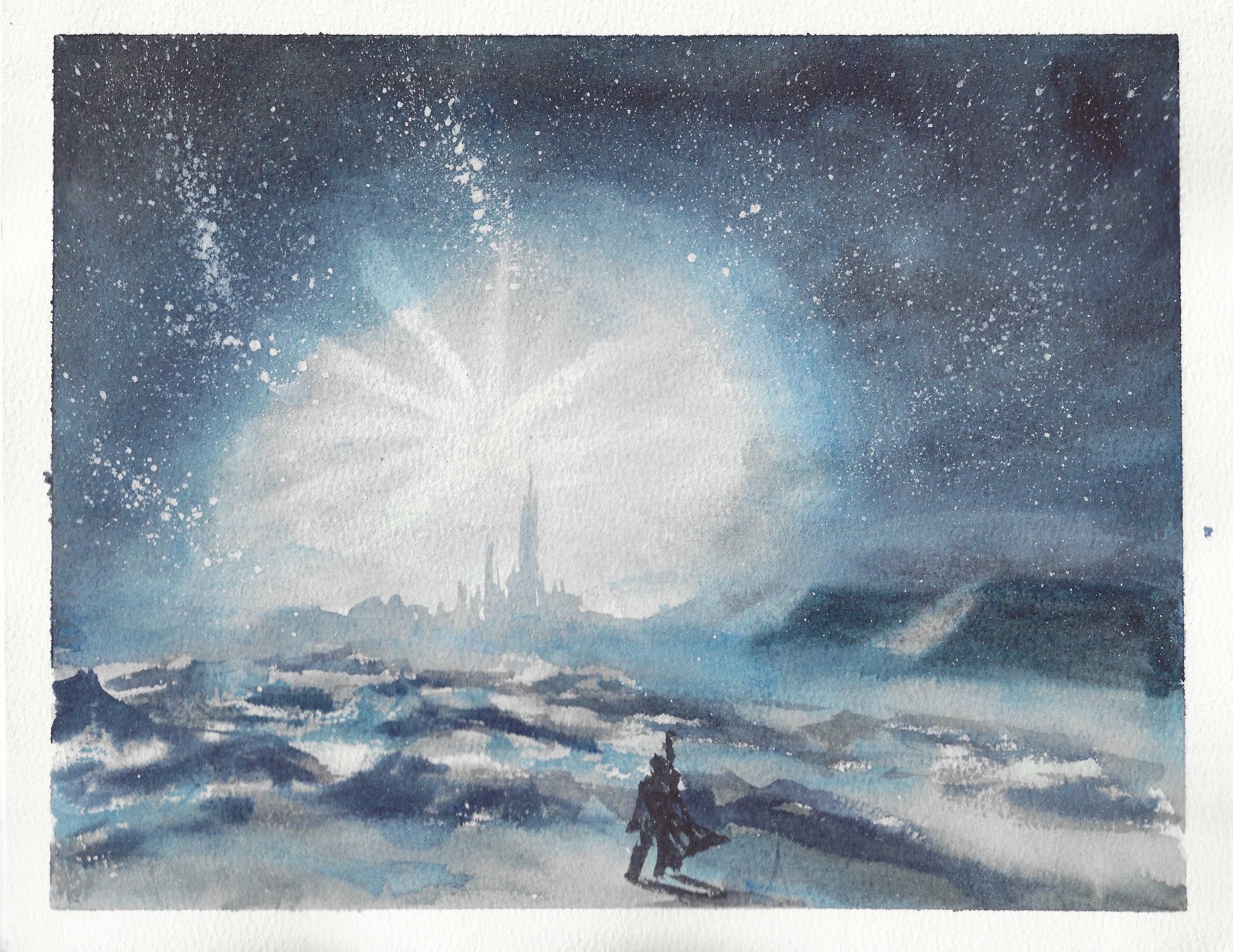
I started painting in August 2026, after a workshop on how to paint clouds. I mostly paint landscapes, and I'm learning not to overwork them. I want to make the art for my own games myself.
Paints
Open a swatch for its pigment. Swatches are drawn, not scanned: their colours are approximate.
01Ultramarine bluePB29
Swatch 01 · Daniel Smith watercolourMasstone to wash, over a stripe of ink Ultramarine blue
- Colour Index
- PB29 Pigment Blue 29 · C.I. 770071 · Ultramarine blue
- Chemistry
- Sodium aluminium sulfosilicate: the blue of lapis lazuli, made synthetically2,1
- Formula
- Na₈₋₁₀Al₆Si₆O₂₄S₂₋₄ (as lazurite, the mineral it copies)3
- Class
- Inorganic, synthetic1
- History
- A prize offered in France in 1824 for an artificial ultramarine led to two processes: Jean-Baptiste Guimet's in 1826, kept secret, and Christian Gmelin's in 1828, published.3,2
The maker’s ratings Transparency Transparent4 Staining Medium4 Granulation Granulating4 Lightfastness I, excellent4 In water It settles into the paper's tooth as it dries, less so in strong washes, and dries noticeably lighter, losing about a fifth of its chroma.4,5
The paint Cooler and greener than Daniel Smith's French Ultramarine: the same pigment, ground to a smaller particle.4
02Phthalo bluePB15:3
Swatch 02 · Daniel Smith watercolourMasstone to wash, over a stripe of ink Phthalo blue
- Colour Index
- PB15:3 Pigment Blue 15:3 · C.I. 741601 · Phthalocyanine blue, green shade
- Chemistry
- Copper phthalocyanine in its β crystal form, the green shade (the ε form, PB15:6, is the red shade)2,3
- Formula
- C₃₂H₁₆CuN₈3
- Class
- Organic, synthetic (phthalocyanine)1
- History
- Copper phthalocyanine was first made in 1927; ICI launched it as a pigment in Britain in 1935, and it became the workhorse industrial blue.3,2
The maker’s ratings Transparency Transparent4 Staining High4 Granulation Non-granulating4 Lightfastness I, excellent4 In water High in tint and strongly staining, it dries much lighter than it looks wet: about a quarter lighter in the green shade, and less saturated.4,2
03Alizarin crimsonPR83
Swatch 03 · Daniel Smith watercolourMasstone to wash, over a stripe of ink Alizarin crimson
- Colour Index
- PR83 Pigment Red 83 · C.I. 580001 · Alizarin crimson
- Chemistry
- 1,2-dihydroxyanthraquinone (alizarin), the red of madder root, fixed as a lake pigment2,3
- Formula
- C₁₄H₈O₄ (alizarin, before laking)3
- Class
- Organic, synthetic (anthraquinone lake)1
- History
- Carl Graebe and Carl Liebermann, working for BASF, made alizarin from anthracene in 1868: the first natural dye made synthetically.3,1
The maker’s ratings Transparency Transparent4 Staining Medium4 Granulation Non-granulating4 Lightfastness IV, fugitive4 In water Dark and intense when wet, it dries lighter, toward maroon, and its tints fade in sunlight; kept from direct sun, a strong wash lasts for decades.2,4
04Quinacridone redPV19
Swatch 04 · Daniel Smith watercolourMasstone to wash, over a stripe of ink Quinacridone red
- Colour Index
- PV19 Pigment Violet 19 · C.I. 739001,2 · Quinacridone
- Chemistry
- Quinacridone, in its γ crystal form for the red (the β form is quinacridone violet)3,2
- Formula
- C₂₀H₁₂N₂O₂2
- Class
- Organic, synthetic (quinacridone)1
- History
- DuPont first sold quinacridones as pigments in 1958.2,1
The maker’s ratings Transparency Transparent4 Staining Medium4 Granulation Non-granulating4 Lightfastness I, excellent4 In water A pure, extremely transparent red that lays smooth, clear washes; a far more lightfast choice than alizarin crimson.4,5
05Hansa yellow lightPY3
Swatch 05 · Daniel Smith watercolourMasstone to wash, over a stripe of ink Hansa yellow light
- Colour Index
- PY3 Pigment Yellow 3 · C.I. 117101,2 · Arylide yellow 10G (Hansa yellow)
- Chemistry
- A monoazo (arylide) yellow1,2
- Formula
- C₁₆H₁₂Cl₂N₄O₄2
- Class
- Organic, synthetic (monoazo)1
- History
- One of the first Hansa yellows: discovered around 1910 and made from 1912.1,3
The maker’s ratings Transparency Semi-transparent4 Staining Low4 Granulation Non-granulating4 Lightfastness II, very good4 In water A clean, high-tinting lemon yellow, brighter and more transparent than cadmium yellow light; with phthalo blue it makes luminous greens.4,5
06New gambogePY97 PY110
Swatch 06 · Daniel Smith watercolourMasstone to wash, over a stripe of ink New gamboge
- Colour Index
- PY97 Pigment Yellow 97 · C.I. 117671,2 · Arylide yellow FGL
- Chemistry
- A monoazo (arylide) yellow1
- Formula
- C₂₆H₂₇ClN₄O₈S2
- Class
- Organic, synthetic (monoazo)1
- History
- A later, more lightfast Hansa yellow, from the 1950s and 1960s (handprint dates it 1953, artistpigments.org 1961).3,1
- Colour Index
- PY110 Pigment Yellow 110 · C.I. 562804,5 · Isoindolinone yellow R
- Chemistry
- A tetrachloroisoindolinone4,5
- Formula
- C₂₂H₆Cl₈N₄O₂5
- Class
- Organic, synthetic (isoindolinone)4
- History
- Patented in the 1950s and made from the mid-1960s.4,3
The maker’s ratings Transparency Transparent6 Staining Low6 Granulation Non-granulating6 Lightfastness I, excellent6 In water A transparent, warm yellow toward orange; it stains more than yellow ochre and tints like raw sienna, so it stands in for both where a clear, smooth wash is wanted.6
The paint Daniel Smith's New Gamboge used to be PY153; that pigment stopped being made, supplies ran out in 2012, and the paint was reformulated.3
07Buff titaniumPW6:1
Swatch 07 · Daniel Smith watercolourMasstone to wash, over a stripe of ink Buff titanium
- Colour Index
- PW6:1 Pigment White 6:1 · C.I. 778911 · Titanium white, buff
- Chemistry
- Titanium dioxide (rutile), in an off-white, buff grade1,2
- Formula
- TiO₂1
- Class
- Inorganic, synthetic1
- History
- Titanium white was developed for industry in the 1910s, by the Titan Company in Norway and the Titanium Pigment Company in the United States.3
The maker’s ratings Transparency Semi-transparent4 Staining Non-staining4 Granulation Granulating4 Lightfastness I, excellent4 In water Semi-opaque to semi-transparent and granulating: dropped into a damp wash, it pushes the other pigment aside, which is how it makes soft clouds.4
The paint Unique to Daniel Smith: the ecru of sand and antique lace.4
From my painting: Acts like white gouache without much of the chalkiness.
08Payne's greyPB29 PBk9
Swatch 08 · Daniel Smith watercolourMasstone to wash, over a stripe of ink Payne's grey
- Colour Index
- PB29 Pigment Blue 29 · C.I. 770071 · Ultramarine blue
- Chemistry
- Sodium aluminium sulfosilicate: the blue of lapis lazuli, made synthetically2,1
- Formula
- Na₈₋₁₀Al₆Si₆O₂₄S₂₋₄ (as lazurite, the mineral it copies)3
- Class
- Inorganic, synthetic1
- History
- A prize offered in France in 1824 for an artificial ultramarine led to two processes: Jean-Baptiste Guimet's in 1826, kept secret, and Christian Gmelin's in 1828, published.3,2
- Colour Index
- PBk9 Pigment Black 9 · C.I. 772674 · Bone black
- Chemistry
- Carbon on calcium phosphate: animal bone charred without air (ivory black is now another name for it)5,4
- Formula
- C with Ca₅(PO₄)₃(OH): about 7–10% carbon, 57–80% calcium phosphate5
- Class
- Inorganic and carbon, from animal bone5
- History
- Bone and ivory blacks are historic artists' pigments, valued for their depth of colour.5
The maker’s ratings Transparency Semi-transparent6,7 Staining Low6,7 Granulation Granulating6,7 Lightfastness I, excellent6 In water A cool blue grey: dilute, for wet skies and flat water; concentrated, for storm clouds, rocks and their shadows.6
The paint Named after William Payne, a watercolourist working from 1776 to 1830, who first mixed it from Prussian blue, yellow ochre and crimson lake.8
09Burnt siennaPBr7
Swatch 09 · Daniel Smith watercolourMasstone to wash, over a stripe of ink Burnt sienna
- Colour Index
- PBr7 Pigment Brown 7 · Burnt sienna
- Chemistry
- Natural iron oxide earth, calcined (heated) until part of it turns to anhydrous iron oxide, hematite1,2
- Formula
- Fe₂O₃, with clay and a little manganese oxide2
- Class
- Inorganic, natural earth1
- History
- Named after Siena, the Tuscan city where it was produced in the Renaissance; burnt earths were probably first made when iron-rich clays were fired in kilns, about 8,000 years ago.2,1
The maker’s ratings Transparency Semi-transparent3 Staining Non-staining3 Granulation Granulating3 Lightfastness I, excellent3 In water A rich, warm earth that mixes without losing intensity or transparency, and later glazes over it neither muddy nor stain it.3
10Titanium white gouachePW6
Swatch 10 · Royal Talens Extra Fine gouacheMasstone to wash, over a stripe of ink Titanium white gouache
- Colour Index
- PW6 Pigment White 6 · C.I. 778911 · Titanium white
- Chemistry
- Titanium dioxide1,2
- Formula
- TiO₂2
- Class
- Inorganic, synthetic1
- History
- Developed for industry in the 1910s in Norway and the United States, it has since replaced lead white as the white artists use most.2,1
The maker’s ratings Transparency Opaque3 Staining Not rated by the maker4 Granulation Not rated by the maker4 Lightfastness +++, at least 100 years under museum conditions4 In water Opaque, unlike the watercolours: gouache's opaque extender makes it cover what is under it instead of letting it show through.3